
StartCompareFaces Routine KYC Ecuador
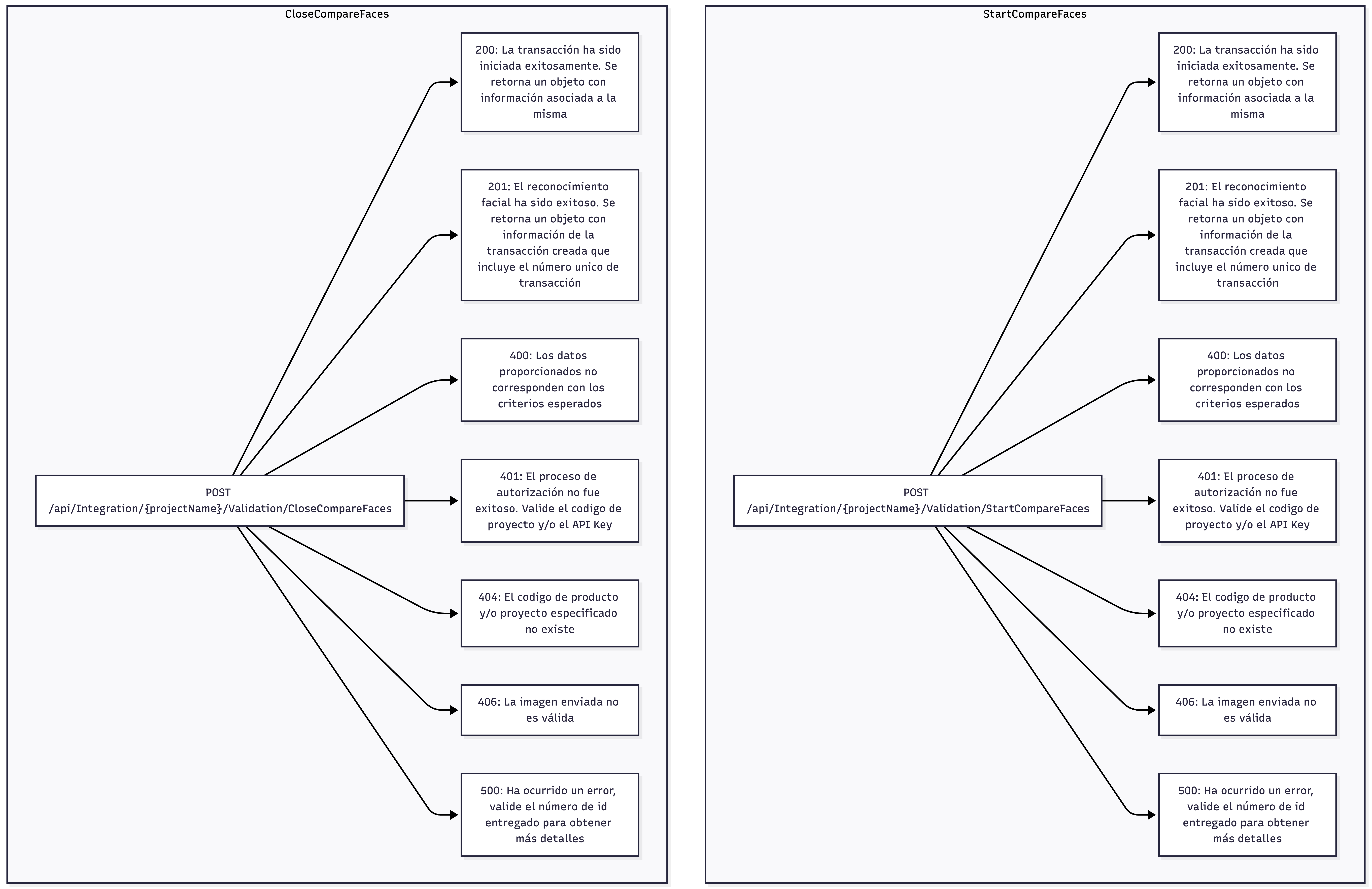
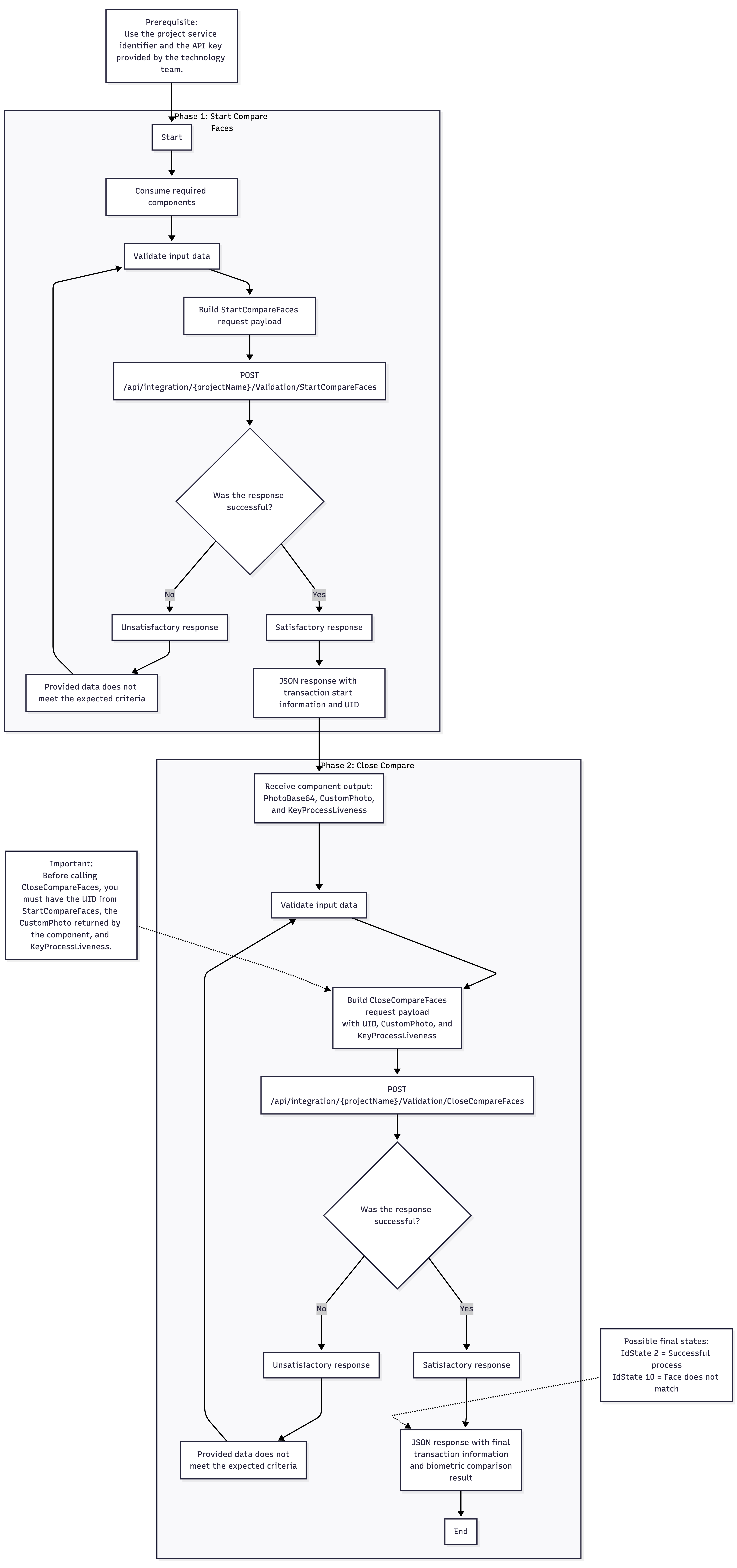
This routine is designed as a two-step face comparison transaction. The process begins with StartCompareFaces, which creates the transaction and returns the Uid required to continue the flow. The transaction is then completed with CloseCompareFaces, where the final customer face image is submitted together with the same Uid. The response of the close service can already contain transaction data and comparison result fields through BaseValidationDto.
Services
How to Communicate Responses
The integration should communicate Uid as the technical correlation value that links the start request to the close request. The final user-facing outcome should be derived from the response returned by CloseCompareFaces, since that call completes the routine and can return transaction data and comparison result indicators. If the consuming platform needs additional audit or expanded transaction details, the returned TransactionId can later be used in other validation lookup flows already documented in the project.
Response Received
Both services return data aligned with BaseValidationDto. Relevant fields include Uid, TransactionId, customer identification data, and several face-comparison-specific properties exposed by the Swagger model, such as ComparationFacesSuccesful, ResultComparationFaces, ComparationFacesAproved, ThresholdCompareDocumentFaces, and CompareFacesDocumentResult. The start request schema is defined by ApiValidationCompareFaces, which includes fields such as ProductId, CustomerServicePhoto, SignaturePhoto, DactilarCode, IdentificationNumber, Name, DocumentType, longitude, Latitude, UrlCallback, Gender, and BirthDate. The close request schema is defined by ApiCloseValidationCompareFaces, which includes CustomerPhoto, Uid, and KeyProcessLiveness.
Flow Diagram
Service Invocation
The integrator starts by calling StartCompareFaces and storing the returned Uid. That Uid must be reused in CloseCompareFaces, together with the customer photo and, when applicable, the liveness process key. Once CloseCompareFaces returns, the consuming application can evaluate the transaction identifiers and the face comparison result fields included in the response body.
Recommendations
The same Uid must be preserved without modification between the two calls. The implementation should validate the quality of both the service-side source image and the customer photo to reduce 406 responses. If the flow depends on liveness, the KeyProcessLiveness should be obtained before the close call and passed exactly as issued by the upstream component. Because the Swagger exposes comparison result fields directly in BaseValidationDto, downstream systems should parse those fields explicitly instead of relying only on the HTTP code.